
Why buyer personas rarely help brands grow (and what to do instead) pt 1
Brand Personas as Decoration
Brand personas are a staple in brand positioning decks.
A smiling stock photo.
A name. Usually something like Emma or Susan.
Thirty-eight years old. Lives in the city. Loves yoga. Drinks matcha. Has a dog. Shops consciously. Loves authenticity.
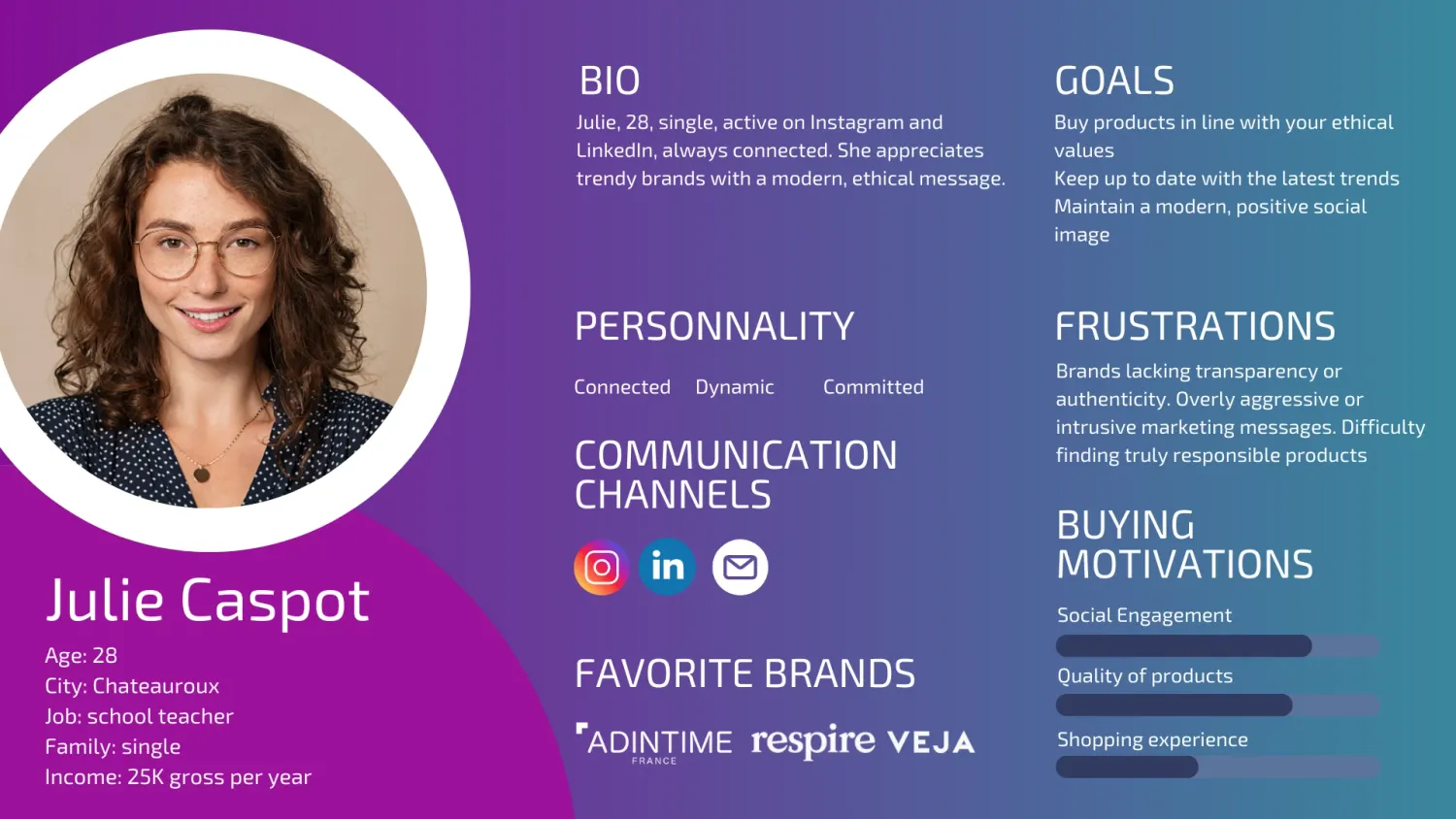
While it looks like strategy on a page, in reality, the confidence level behind it is often about as solid as saying people who go to the gym don’t eat sugar.
Now, before the pitchforks come out … personas aren’t inherently bad. There is also a particular industry/segment of consumers where brand/buyer persona actually makes a lot of sense on a strategic level. I’ll cover that in the next post as Part 2.
My point is: Most teams start with personas. But it rarely tells you anything useful about how a market actually behaves. It often sends the entire process in the wrong direction.
Who Are The Buyers?
Decades of research from the Ehrenberg-Bass Institute show something that makes many persona decks look a bit shaky.
People buy when the situation calls for it.
This is why Byron Sharp and Jenni Romaniuk emphasize mental availability: brands grow when they are easily recalled in buying situations.
Which means the real strategic question isn’t:
Who is Susan?
It’s:
When does someone enter the category?
Start with the market, not the person
The first job of strategy is understanding how the market is structured.
This is segmentation. Not personas. Ritson is very clear on this.
Segmentation tells you:
who exists in the market
how large those groups are
where the value pools are
where growth might come from
As Les Binet and Ehrenberg-Bass research show, brand growth usually comes from reaching more category buyers, not narrowing the audience too aggressively.
So segmentation answers a business question:
Where is the money?
Understand buying situations
Once the market is understood, the next step is identifying Category Entry Points.
CEPs explain when people enter the category. They are the moments when demand appears.
For example, in my own work, the CEPs are very clear.
Companies usually come to me when:
the business has grown large enough that “winging the brand” no longer works
the leadership team knows strategy is needed but nobody internally has the know-how
the founder tried doing it alone and it created more friction than clarity
None of these situations have anything to do with a demographic persona.
They are buying moments.
And those moments matter far more than someone’s favourite coffee.
Understand the job behind the moment
Once you know the moment, you need to understand the job behind it.
This is where Jobs To Be Done becomes useful.
JTBD focuses on what the buyer is trying to accomplish. Not who they are.
For example, when a leadership team hires a brand strategist, the job is rarely just “create a brand strategy”.
The real job is something deeper.
Often it looks like this:
Functional job
→ build a brand foundation to align marketing
Emotional job
→ remove uncertainty and internal debate
Social job
→ signal competence and direction inside the organisation
Understanding that job is far more useful than knowing whether the buyer runs marathons (unless I sell running shoes:)).
Map the real alternatives
Once you understand the job, you can examine brand alternatives.
April Dunford’s positioning framework is very straightforward: buyers always compare solutions against alternatives.
But those alternatives are not always obvious competitors.
Sometimes the real alternatives are, let’s look at my example again:
continuing to improvise
hiring a marketing agency instead of an independent strategist
delegating internally
Understanding those alternatives defines the competitive frame. Without that frame, positioning becomes vague. Positioning is about being more of what matters to your customer, and what the alternatives offer.
Define brand attributes
Only after the market, the moment, the job, and the alternatives are understood do brand attributes become meaningful.
Attributes are the signals that tell buyers why your brand is the right choice. This is when they check if you as a brand can provide what is important to them (that can be functional, emotional)
For me, the attributes I consistently hear from clients are:
experienced
ability to frame the real business problem
calm and structured approach
professional but relaxed
great energy
So, in reality. If you are a business, and you like working with someone who walks in wearing a suit, all serious, and you read about me as listed above, there is a chance you're gonna want to explore alternatives that will bring you the experience that you prefer/value more.
These are not labels to boost the ego.
They are signals that help the brand become meaningful and different in the mind of the buyer. Exactly the combination Kantar research shows drives brand growth.
What personas get wrong?
Personas collapse all of this complexity into a fictional individual.
They describe the person. Often described through the lens of internal stakeholders. Internal people are not the consumer. No matter how much time we spend marketing our brand. Only the consumer is the consumer.
Strategy needs to explain the market, the moment, and the motivation.
Which is why personas often produce a lot of effort for very little strategic return.
They look good in a deck. But they rarely help answer the questions that actually drive growth.
The takeaway
The next time you start a strategy project, resist the urge to open a persona template.
Instead ask:
How is the market structured?
When do buyers enter the category?
What job are they trying to get done?
What alternatives are they considering?
And why should they choose this brand?
Answer those questions well, and you’ll know far more than Susan ever could.
Strategy is about understanding markets and what will move the business forward.
------------------------------------
Ready to Take Your Brand to the Next Level?
If you’re serious about growth, you need more than a new logo. You need a Brand Strategy Plan - your roadmap that shows you step by step what to do, when to do it, who to involve, and what outcomes to expect.
Because brands don’t evolve by accident. They grow because you know what you are doing.
Get in touch:
support@ledbybrand.com


© 2026 Led By Brand. All rights reserved.
All content, images, and digital products on this website are the property of Led By Brand and may not be used or reproduced without permission.